




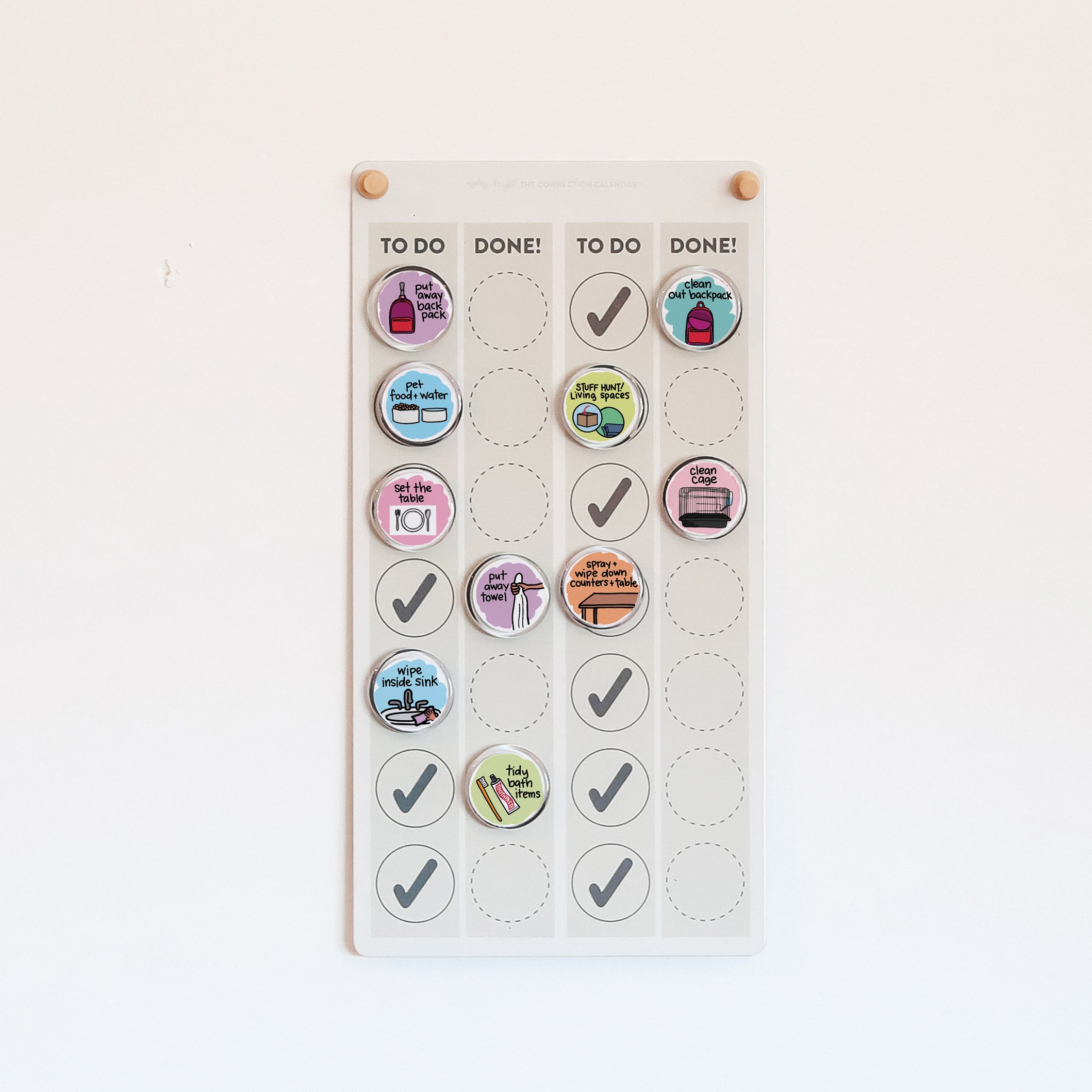
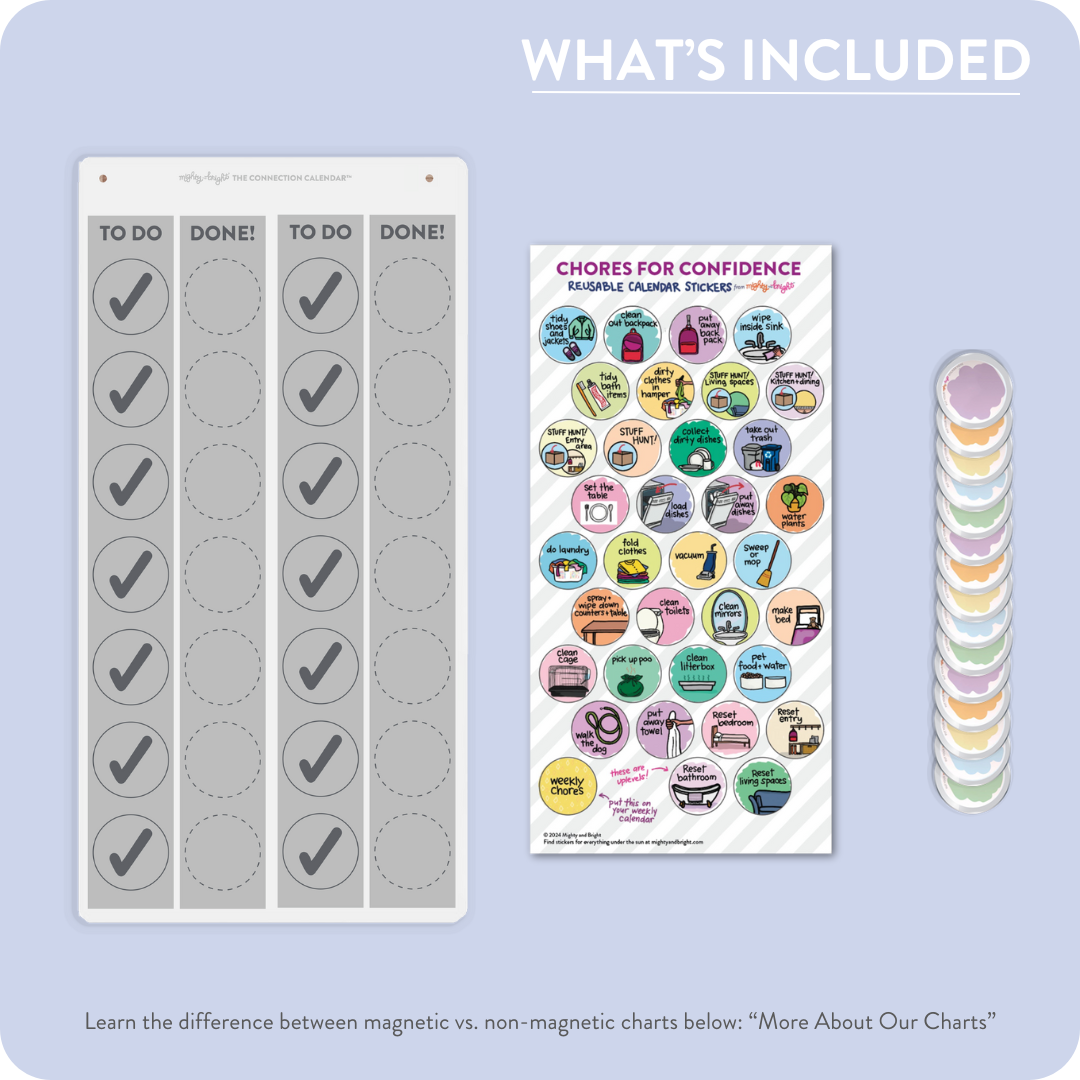
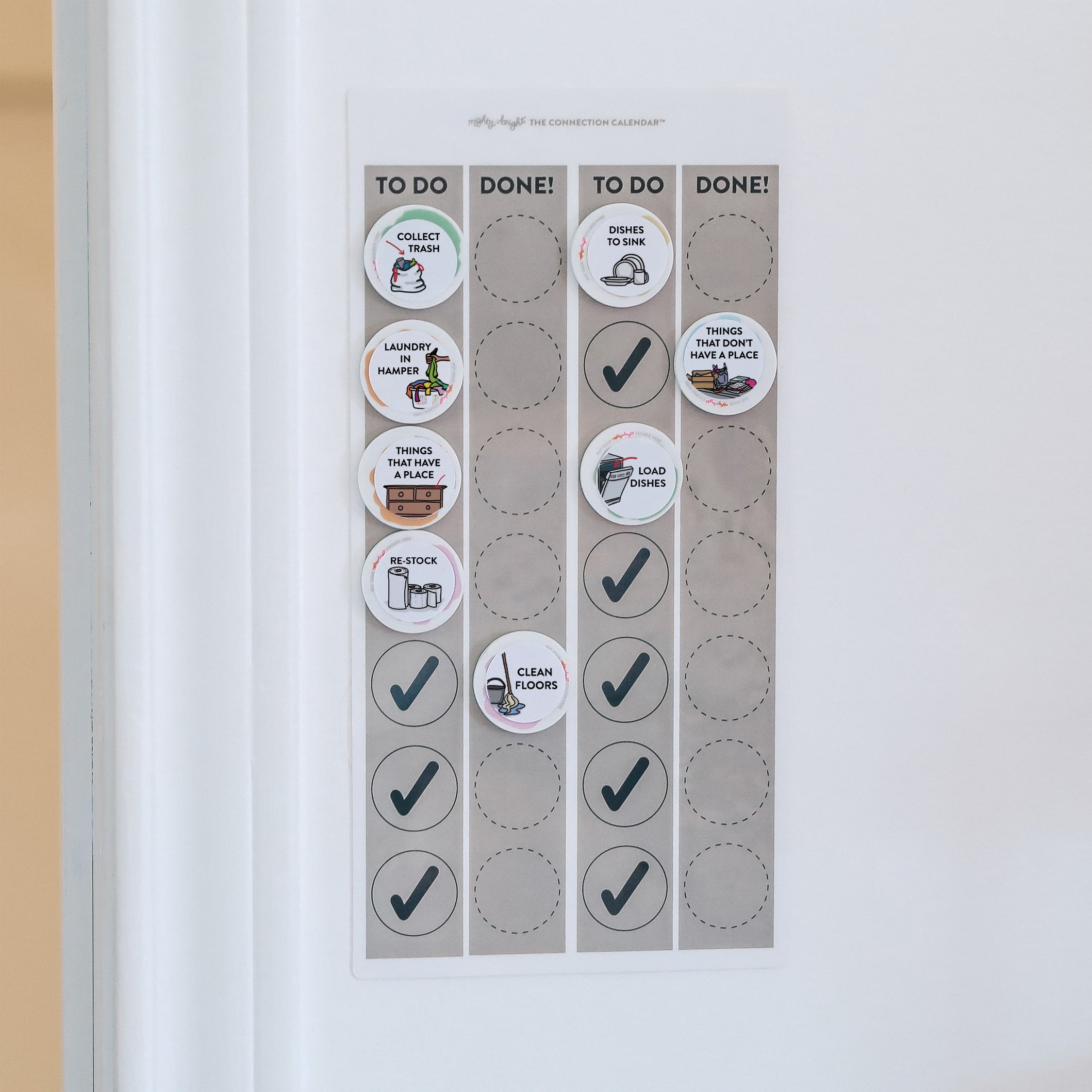
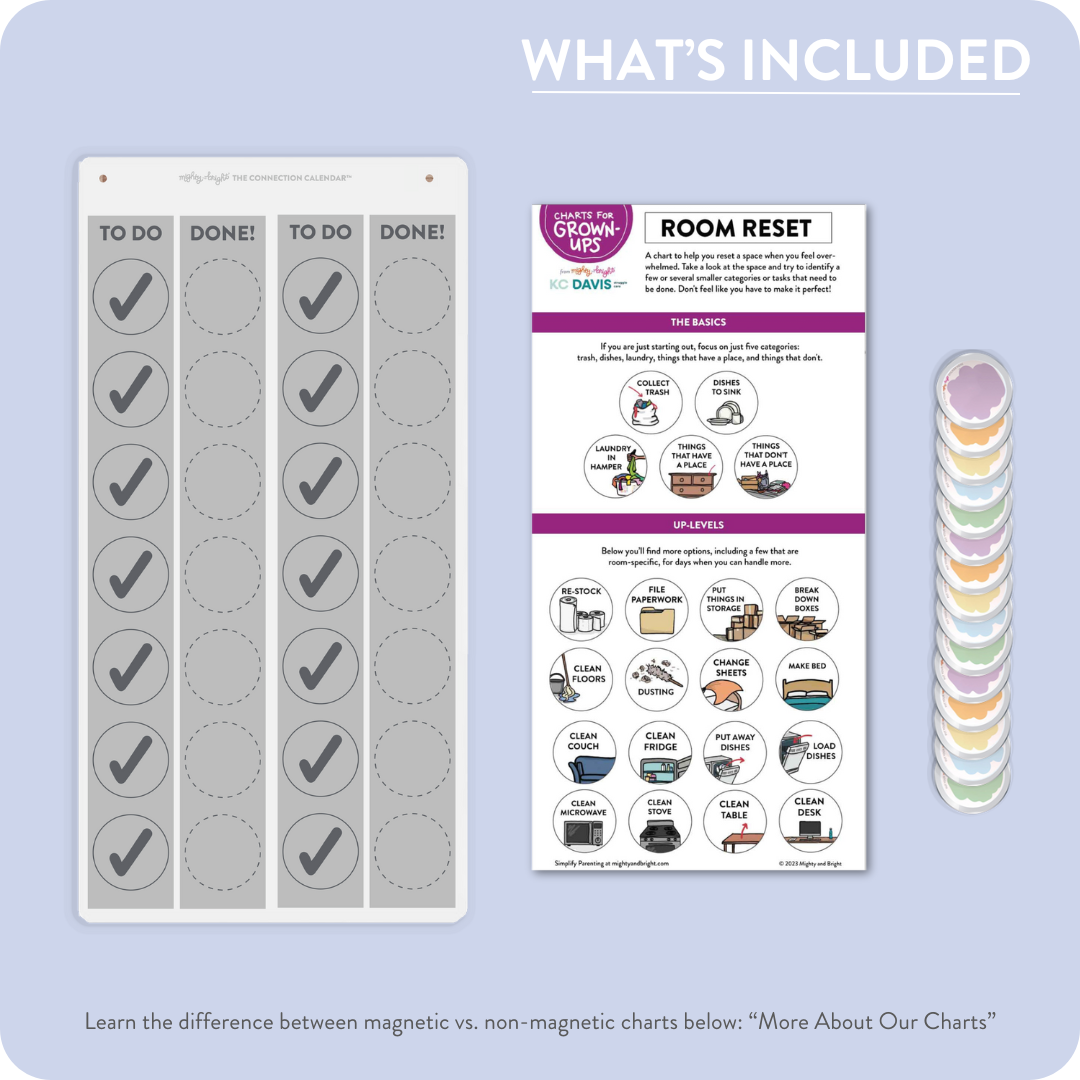
Stop spending hours on laminators and velcro. Use a science-based visual system that works.
Occupational Therapists (OTs), Speech-Language Pathologists (SLPs), and behavioral therapists frequently use visual schedules to map out daily routines, therapy sessions, and complex multi-step tasks.
Typically, creating these tools is an expensive, labor-intensive process. Therapists spend valuable time on:
- Designing custom layouts in Canva or searching for clip-art
- Printing, laminating, and cutting out individual pieces
- Managing bulk velcro, magnets, and storage
There is a more efficient way to support your clients.
The Mighty + Bright Solution: Flexible, Reusable Visual Systems
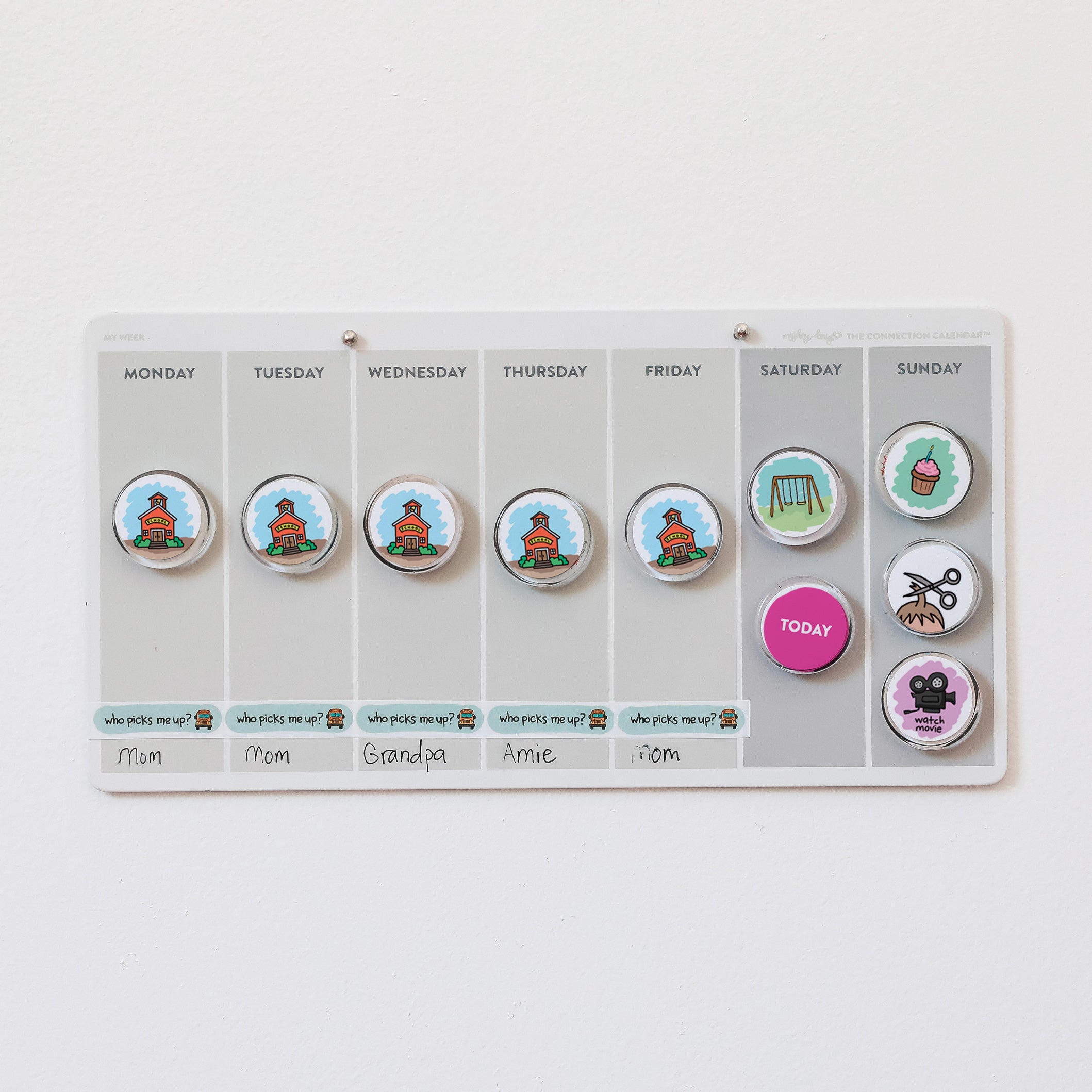
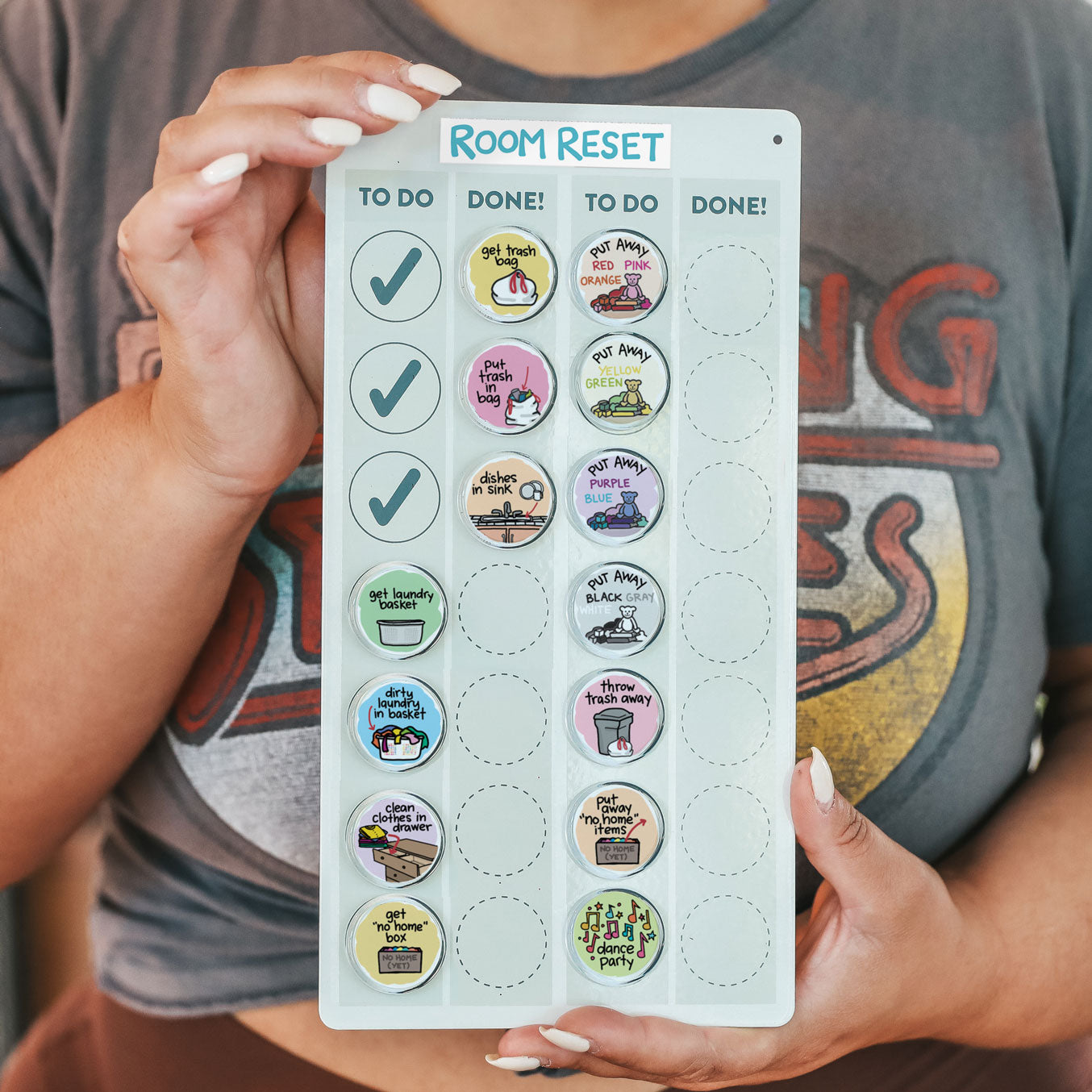
Mighty + Bright offers a science-backed visual schedule system refined over more than a decade of research and development. Instead of building from scratch, our flexible system allows you to customize schedules instantly for every unique family and client.
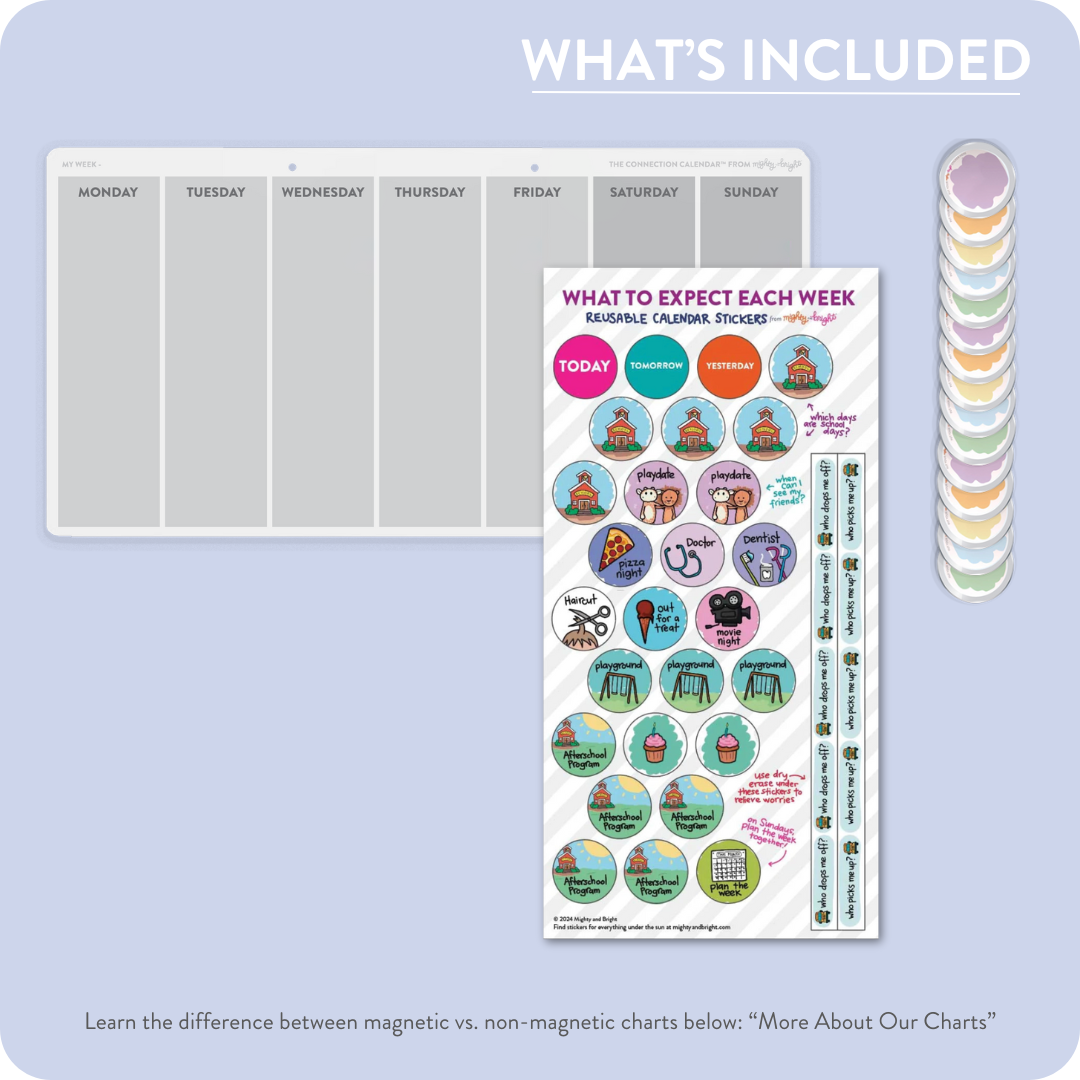
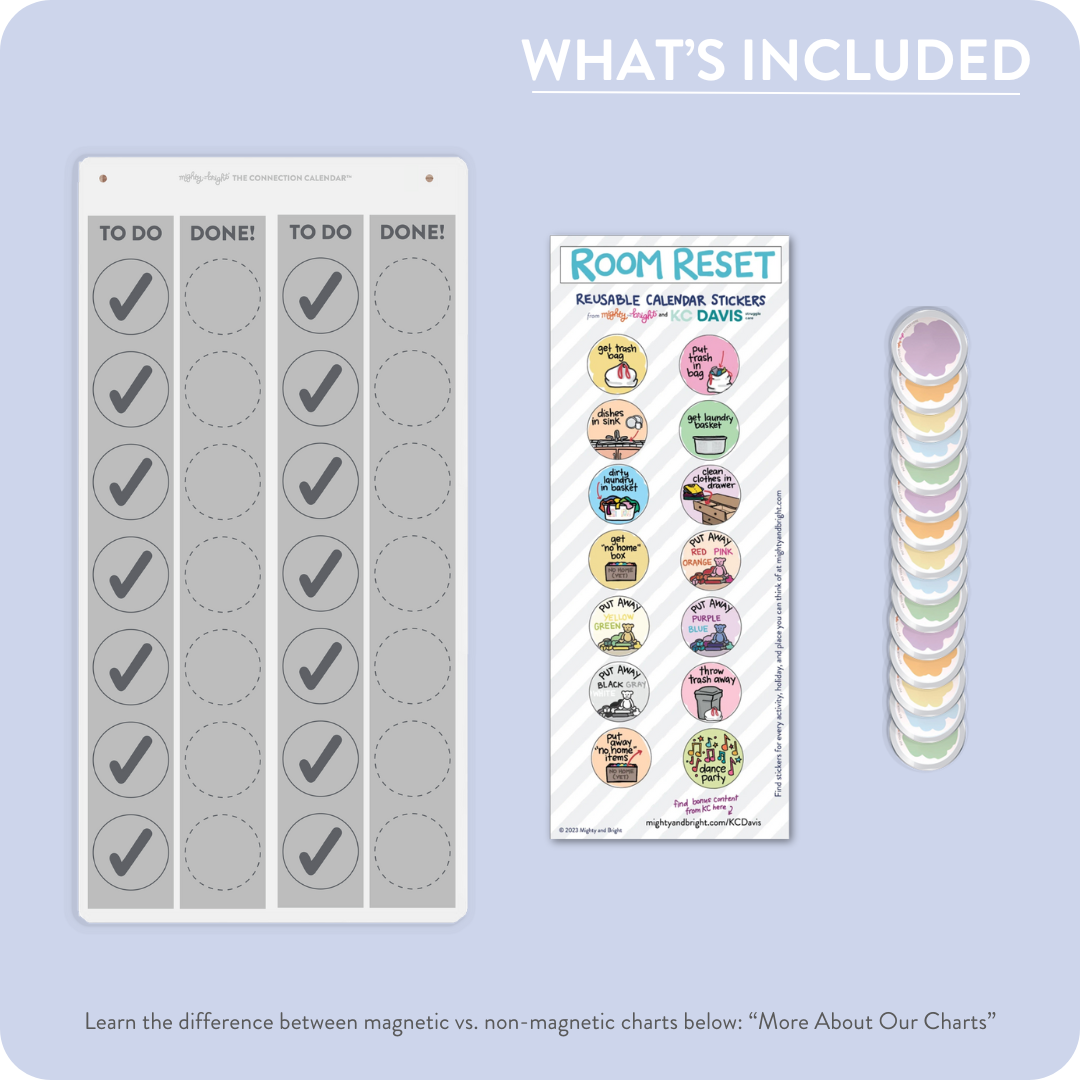
- Reusable Stickers & Magnets: Easily adapt schedules on the fly without printing new materials.
- Durable Visual Charts: High-quality, professional layouts designed to withstand daily use.
- Evidence-Based Design: Built on executive functioning research to reduce cognitive load and anxiety.
Why it matters: By replacing DIY laminated schedules with a standardized, flexible system, clinics and independent therapists save hours of administrative prep time every week—allowing more focus on direct patient care.
Free Executive Functioning Resources for Clinicians
We know that client success depends on parent buy-in. To help you educate families, we provide free clinical resources explaining:
- Executive functioning deficits and how they impact daily life.
- The neurobiology of visual tools in reducing transition anxiety.
- Best practices for implementing visual schedules at home.